
In checking the original bank PDFs against the English translation copies, check the footer of the original first. As a hypo, if the original says Page 5 of 6 then make sure all 6 images have been opened and that the 6th page is complete.
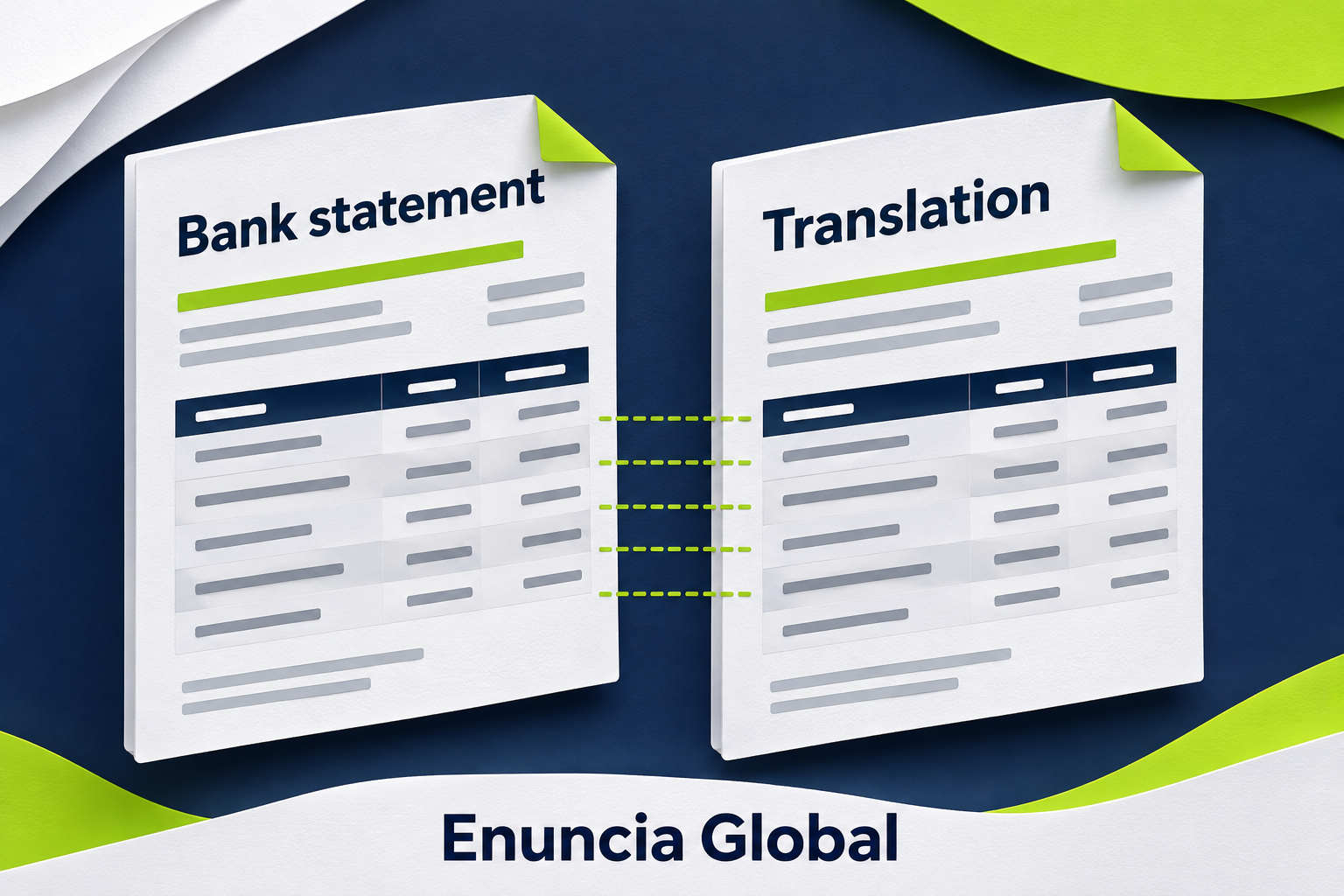
The note to explain an entry on another sheet can be on page six of the PDF and it can also be a page of very few words. You cannot tell from the first page of the PDF whether this is going to be a complete record or not. So return to the complete bank download rather than trying to make an assumption about what may or may not be included in the translation of the first page of the PDF.
In addition to checking the number of pages of the translated document(s) against the original(s), ensure that no part of the original(s) has been cut off at the edge of the scan/translation. Even seemingly minor parts of a stamp or other annotation in the margin of a page could be missed.
Keep any marked-up working copies separate from the bank download. Record a rotation or a change in page order so the correct sequence stays clear. Leave the original bank PDF untouched. This is practical file handling, not a new requirement to submit a reproduction log.
What should come back from the translator?
The GOV.UK visitor supporting-documents guide requires a full translation of a submitted document not in English or Welsh. It must be independently verifiable by the Home Office. Each translation must contain confirmation from the translator that it is accurate, the translation date, the translator’s full name and signature, and the translator’s contact details.
The confirmation of a statement by the translator does not have to be in the form of a large logo at the end of a certificate. The entire statement submitted by the applicant has to have been translated by the translator.
Note that the date of translation is a separate purpose from the date on the bank statement i.e. the date the statement was issued by the bank or the cover sheet period for which the statement has been supplied. The translator will need to confirm the final version of the translated document that you intend to submit.
Always check the current GOV.UK visitor guidance as well as the application instructions for the required documents and statement periods. The finance evidence requires proof of available funds as well as proof of the origin of the money. Translation of the bank statements only creates readable documents, the translation itself does not explain unknown entries on the statements and thus also does not confirm fulfillment of the visitor requirements for the application support.
Now read across a row
Correct reproduction of figures and currency with same meaning as original bank statements (reproducing a converted amount to pounds as a calculated value would not be correct translation). Also note whether each amount is incoming or outgoing and what the corresponding heading says.
Keep each merchant description related to its individual transaction. Where an English description is longer than one line, it may wrap onto another line, but it must remain clearly associated with that transaction. It should not look like part of the description for the transaction below it. A smaller font is not the only way to make the table fit.
Query any abbreviations used that you are unsure of and translate any explanations given in the bank’s legend to ensure that you can provide an accurate translation. Check for any unreadable dates, figures and/or stamps and obtain further copies or clarify with the relevant authority as necessary. If in any doubt regarding any part of the translation, state uncertainty and do not assume an error with the original documentation.
A passport may have given a full name whereas the bank statement has listed the account holder by their initials. Therefore the translation must reproduce the exact wording of the bank statement. This means that even though a passport holder’s full name may have been given, a translation of “A. B.” would be correct provided that the bank statement had referred to the account holder by those exact initials. If there is any discrepancy then this must be pointed out in other evidence provided.
Correcting errors in the translation compared to the source documents is different to finding an error in the bank’s own documents. That error needs to be addressed by the bank or another appropriate authority and not by the translator silently altering the English version of the documents that he or she has translated.
Before the file goes into the application
It would also be useful for you to confirm that the original documents have been kept against their translations, that all pages have been included and that they are in the same order as the originals. We would also expect you to confirm that all account details and totals have been correctly translated as well as all headings and any additional notes.
Even if you have made changes to your translated copy of your original document(s), the signed confirmation must be for the version of your translated documents that you will use for your application. This will be your final version and must be kept separate from earlier working copies that you will also have made of your translated documents.
Enuncia Global can discuss translating a complete, readable statement and providing the required confirmation. Share all pages and the specific instructions with the enquiry. Translation alone cannot guarantee a visa decision. Finally, check the footer again. If it says six pages, have you found the sixth?