
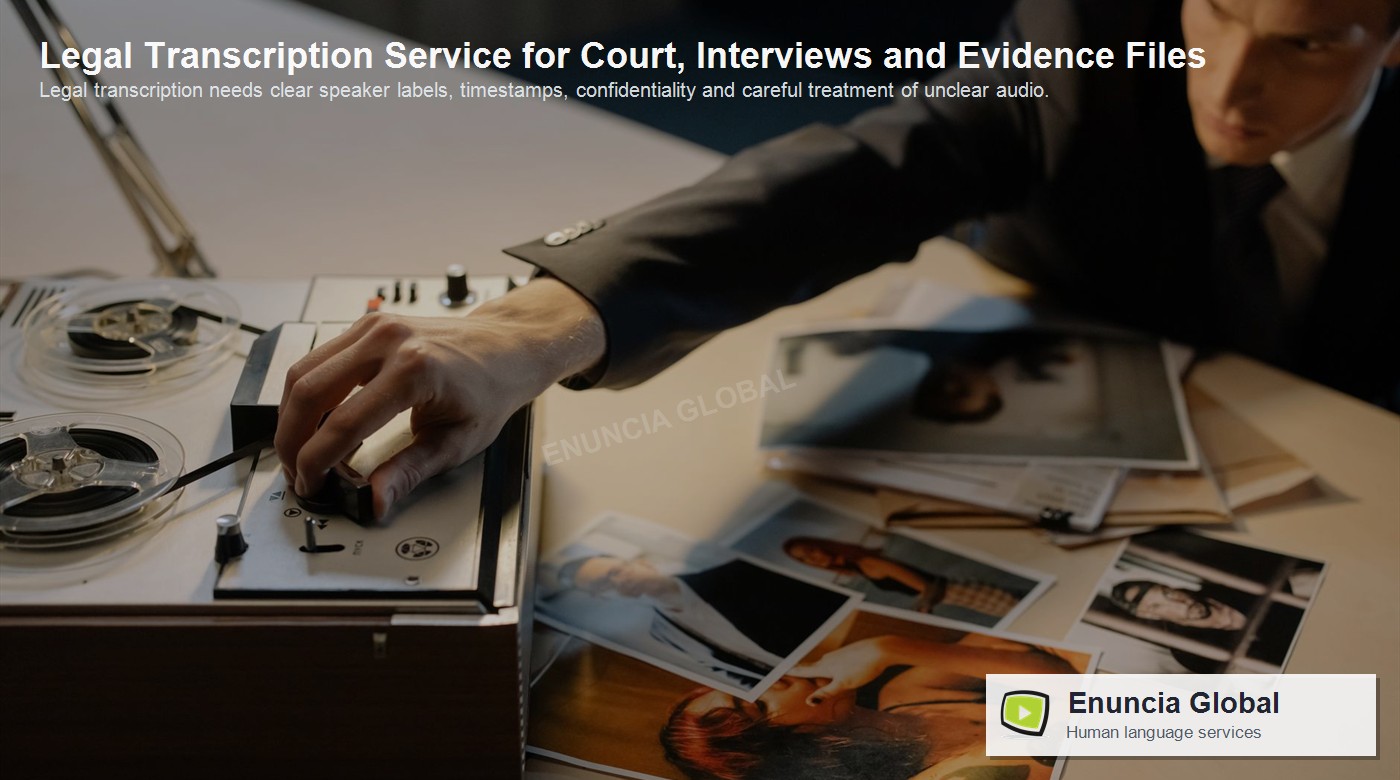
Legal Transcription Service for Court, Interviews and Evidence Files is part of Enuncia Global’s Ubersuggest-led content plan for language, documentation and media-service buyers.
Legal transcription turns speech into a record that people may rely on later. That makes speaker labels, timestamps, unclear words, interruptions and context notes more important than decorative formatting.
A Legal Transcript Should Not Guess
Court recordings, interviews, witness conversations, client meetings, investigation audio, arbitration sessions and phone recordings may contain overlapping speech, background noise, names, dates, acronyms and legal terms. If a word is unclear, it should be marked responsibly.
The transcript can be verbatim, clean verbatim, time-coded or summary-style depending on the use. That choice should be made before the work begins.
Speaker Labels And Timestamps
Speaker labels help a reviewer understand who said what. Timestamps help locate the moment in the recording. Both become important when a lawyer, internal team, compliance reviewer or authority needs to compare the transcript against the audio.
If the client knows speaker names, those should be shared. If not, neutral labels can be used until the client confirms names.
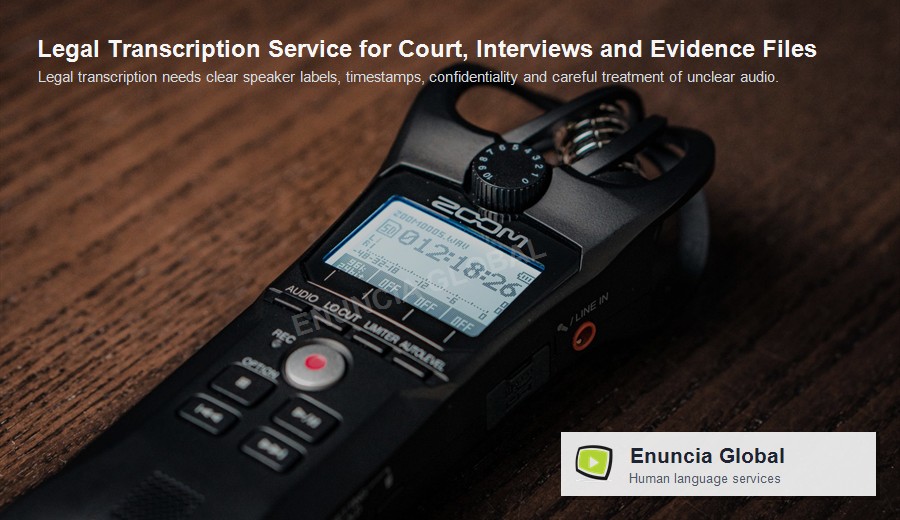
What To Share Before Quoting
- audio or video duration and file format
- number of speakers and known names where available
- topic, accent difficulty and background-noise warning
- need for verbatim, clean transcript, timestamps or translation
- deadline and confidentiality requirement
When Translation Is Connected
Some legal recordings need transcription in the source language first, then translation into English or another target language. That is different from direct translation because the transcript becomes the audit trail.
For bilingual or multilingual recordings, the team identifies language switches and prepares the output route around the final reader.
Before You Ask For A Quote
- send the complete file, recording, video or brief
- state the source and target language clearly
- include final use, deadline and receiver instruction
- share glossary, names, spellings and format requirements
- mention whether certification, subtitles, timestamps, apostille or attestation is connected
Related Enuncia Resources
FAQs
Can unclear legal audio be transcribed?
It can be reviewed, but unclear portions should be marked instead of guessed.
Can timestamps be added?
Yes. Timestamps can be added at intervals, speaker changes or important moments depending on the brief.
Can transcription and translation be combined?
Yes. The recording can be transcribed first, then translated when that route fits the legal review need.
Need This Reviewed?
Share the file purpose, language pair and deadline with Enuncia Global. Use Get Free Quote, call +91-931-505-6112, or email info@enuncia.global.