
Ask what needs to be inspected, by whom and at which stage before handing over an original. The answer depends on the requested service and the receiving organisation's instructions. A request for a translation quote, an inspection of a document and a requirement to submit an original are separate steps.
Start by describing the document type, language pair and intended use. Confirm what files the provider needs to assess scope. Then establish whether the proposed work requires an original, a particular kind of copy or readable digital images. Do not assume that a digital quotation process settles every later document requirement.
Clarify the reason for requesting the original
If someone requests a physical document, ask which task requires it. Is the document to be inspected, copied, attached to another deliverable or sent elsewhere? Who has specified that step? A precise answer helps you understand the handling arrangement before the document leaves your control.
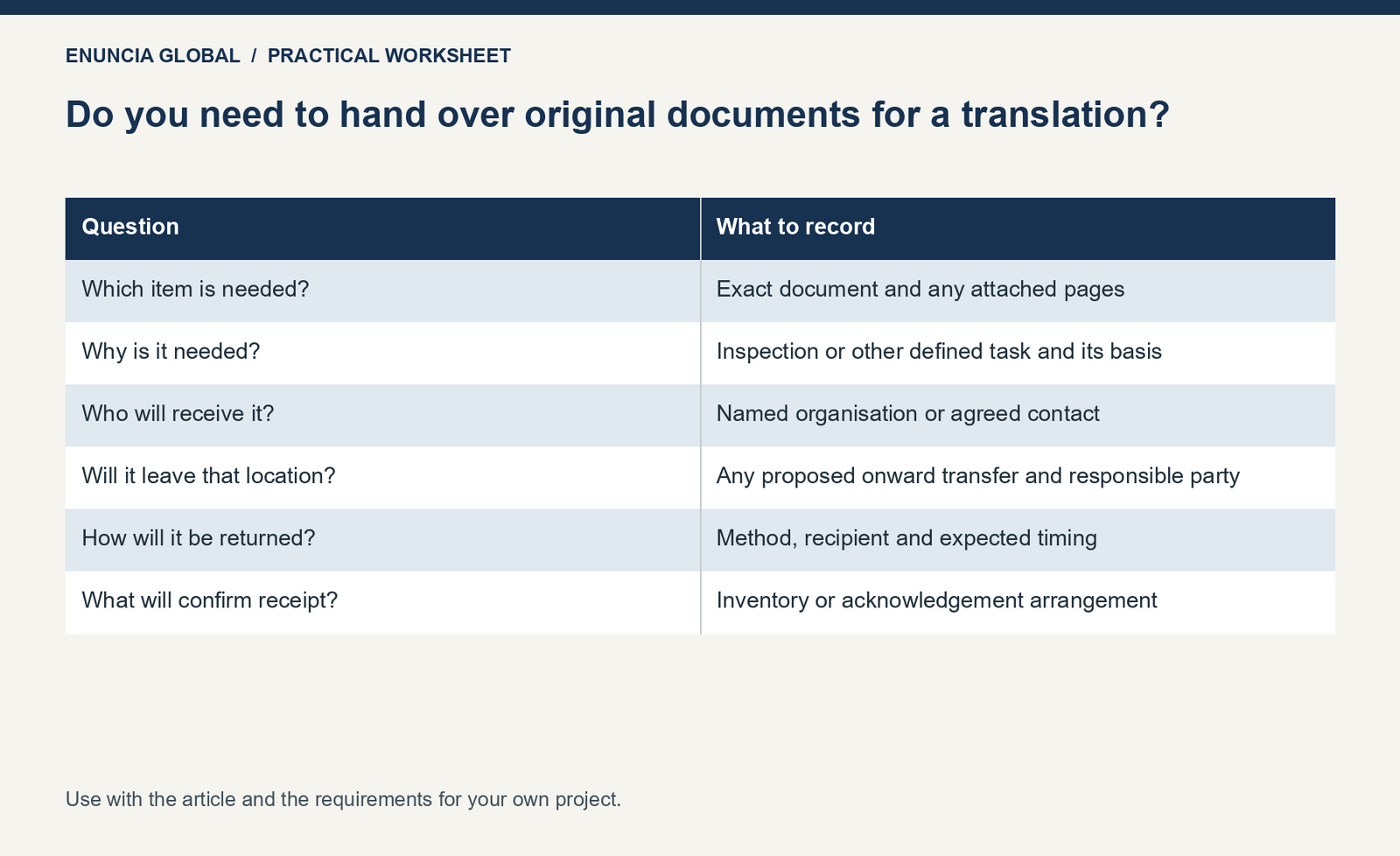
The following checklist can be used to record the discussion:
| Question | What to record |
|---|---|
| Which item is needed? | Exact document and any attached pages |
| Why is it needed? | Inspection or other defined task and its basis |
| Who will receive it? | Named organisation or agreed contact |
| Will it leave that location? | Any proposed onward transfer and responsible party |
| How will it be returned? | Method, recipient and expected timing |
| What will confirm receipt? | Inventory or acknowledgement arrangement |
This is a custody discussion aid. It does not prescribe a universal translation or certification procedure.
Keep originals, copies and translations distinct
A digital image of an original is a different item from the original itself. A translated file is another deliverable. If instructions use words such as “original,” “certified copy” or “translation,” retain the exact wording when you ask for clarification.
Avoid replacing the recipient's language with a provider's shorthand. If the instructions are unclear about which item must be submitted, ask the recipient directly. A translation provider can describe its proposed service, but should not be treated as the source of every external submission rule.
Agree the handoff before sending documents
Prepare an inventory of the physical items you intend to transfer, including attachments. Confirm the delivery address and receiving contact through the agreed channel. Keep a record of what you sent and the acknowledgement you receive.
Ask about access and any onward handling. If another party will perform a separate step, clarify its role before the transfer. Discuss how changes to the agreed handling will be communicated. Avoid assuming that a general statement about confidentiality answers questions about physical custody or return.
Separate the return deadline from the translation deadline
You may need the original for another appointment before the translated output is due. State that dependency at the outset. Ask whether the proposed sequence is feasible and obtain confirmation instead of treating a requested date as a commitment.
On return, compare the items with the inventory. Check that attached material is present and raise any discrepancy promptly through the agreed contact. Keep the translation deliverables and the original-document return record together in your project file.
For a first enquiry to Enuncia Global, describe your documents and intended use privately and provide the recipient's written instructions. The next step is to agree the information required for scope assessment and any separate handling of originals. No physical transfer should be assumed simply because a translation has been requested.
Request a quotation with your document type, language pair and written requirements.