
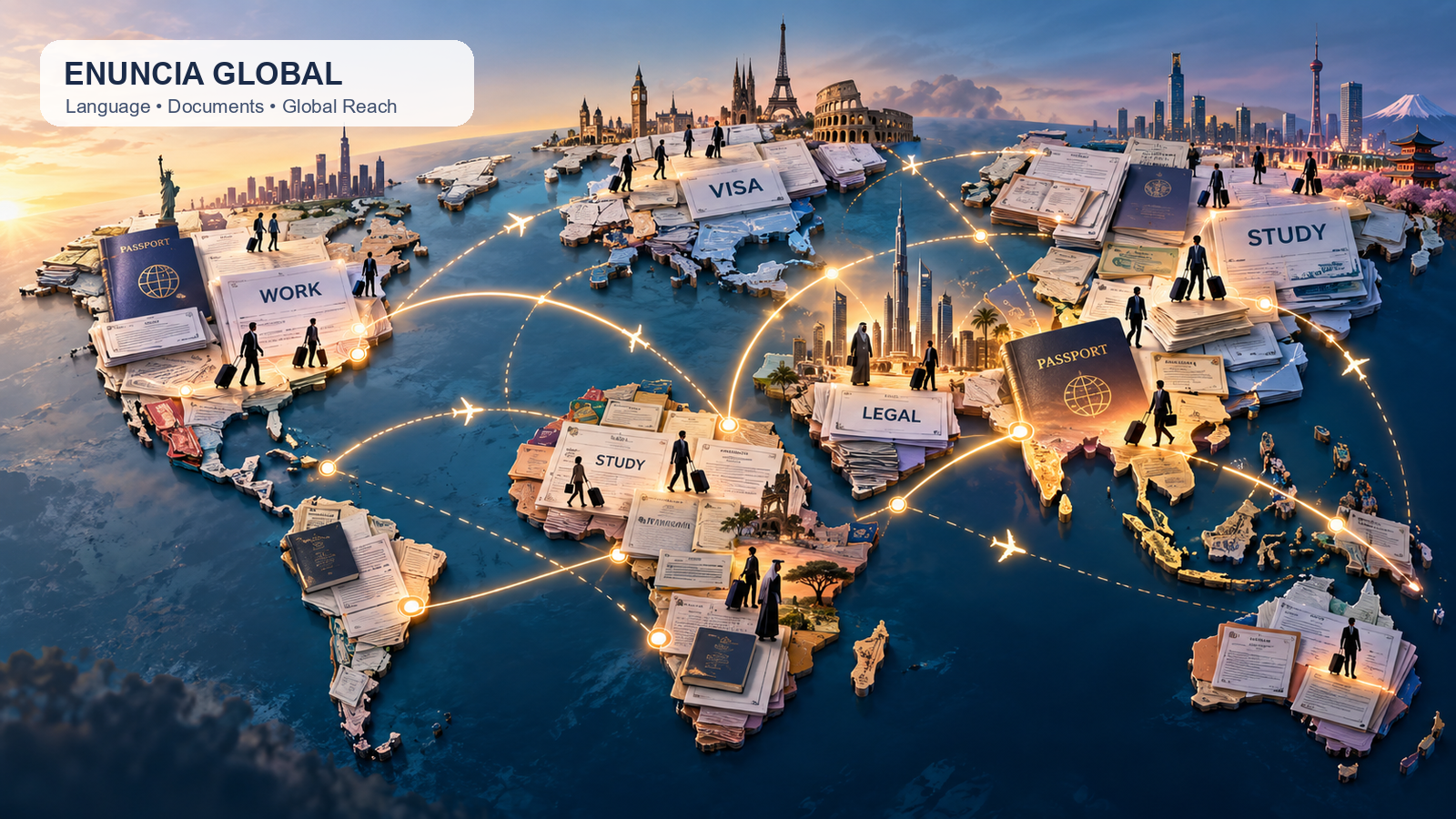
How Global Mobility Is Increasing Demand for Certified Translation Across Study, Work and Legal Files
Global mobility has turned translation into a routine part of life planning. Students apply to universities across borders. Professionals accept jobs in new countries. Families file marriage, birth, divorce, adoption and dependent visa paperwork. Businesses send contracts, compliance papers, product documents and tax records to foreign partners. Every movement creates documents, and every document must be readable to the authority that receives it. This is why demand for certified translation is growing across study, work, immigration and legal files.
Documents travel before people do
Before a person receives a visa, admission letter, work permit or court recognition, their documents travel first. A university may review a marksheet, degree certificate and transcript. An employer may review salary slips, experience letters, background records and tax documents. A family immigration file may include marriage certificates, birth certificates, police certificates, medical papers and affidavits. A court or lawyer may need a divorce decree, contract, power of attorney or inheritance document translated into a language the receiver can rely on.
Language pairs are becoming more varied
English remains a major bridge language, but global mobility now creates demand for many combinations: Japanese to English for manufacturing and technical work, Portuguese for Cape Verde or Brazil, Ukrainian to English for Indian authority use, Nepali to English for legal files, Greek to English for tax records, Hindi to English for visa files, Spanish to English for Latin American documents, and English to French, German, Arabic or Mandarin for overseas submissions. A good translation provider must understand language, document type and destination context together.
Study, work and family routes create different translation needs
Study abroad files usually focus on academic transcripts, degree certificates, recommendation letters, identity records and financial documents. Work migration files focus on employment letters, salary slips, tax papers, police clearance, experience certificates, contracts and professional licences. Family mobility files bring birth, marriage, divorce, adoption, death and relationship documents into the package. Legal mobility files can include court orders, powers of attorney, settlement papers and company authorisations. These categories overlap, but each one asks the translator to pay attention to different details.
The same language pair can therefore produce very different work. A Portuguese translation for a police certificate is not the same job as a Portuguese translation for a company brochure. A Japanese to English interpreter request for manufacturing has a different risk profile from a Japanese academic transcript translation. A Ukrainian birth certificate for Indian authority use requires different handling from Ukrainian marketing content. The value comes from matching the language pair to the document purpose.
Certification and acceptance are not the same thing
Certified translation gives the receiving party a clear declaration about the translation, but acceptance depends on the authority. Some institutions accept translator-certified copies. Others may ask for notarization, apostille, embassy legalization or sworn translator formats. Applicants should check the destination rule before assuming a single format will work everywhere. The safest translation workflow begins with the question: where will this file be submitted?
Why human review still matters
Machine translation can help a reader understand a rough meaning, but official documents require human judgment. Names, stamps, abbreviations, handwritten notes, legal terms and administrative titles need careful handling. A translator must know when to translate, when to transliterate, when to preserve a title, and when to flag unclear text. For high-stakes files, a polished-looking mistranslation can be worse than an obviously rough draft because it may hide an error until submission.
How clients can reduce delay
Clients can reduce delay by sharing full scans, naming the destination country, explaining the service purpose, and sending any instruction received from the authority. If the document has already been apostilled, legalized or notarized, those pages should be shared as part of the same file. If the translation is for a court, immigration authority, university or employer, the receiver’s expected format should be checked before formatting begins.
For businesses, a small terminology list can save time. Product names, corporate names, technical terms and regulated phrases should remain consistent across contracts, manuals, certificates and correspondence. For families, passport spellings and relationship spellings should be agreed before translation starts. These details make the final certified translation easier to use across borders.
Enuncia Global support
Enuncia Global supports certified translation for global mobility, study abroad, employment, immigration, business and legal files. The service covers Indian and international language pairs, document translation, legal translation, embassy-facing translation and business translation. To request a quote, send the document, source language, target language, country of use and deadline by WhatsApp/call at +91 9958625455, email info@enunciaglobal.com or use the Get Quote form.
Frequently Asked Questions
Do I need certified translation for every document? Only when the receiving authority asks for it or when the document has legal, immigration, academic, employment or business value.
Can Enuncia Global handle urgent files? Urgency depends on language, length, legibility and certification requirements. Share the scan and deadline before confirming.
What should I send for a quote? Send the document, source language, target language, country of use, receiving authority and deadline.