
Document rejection prevention
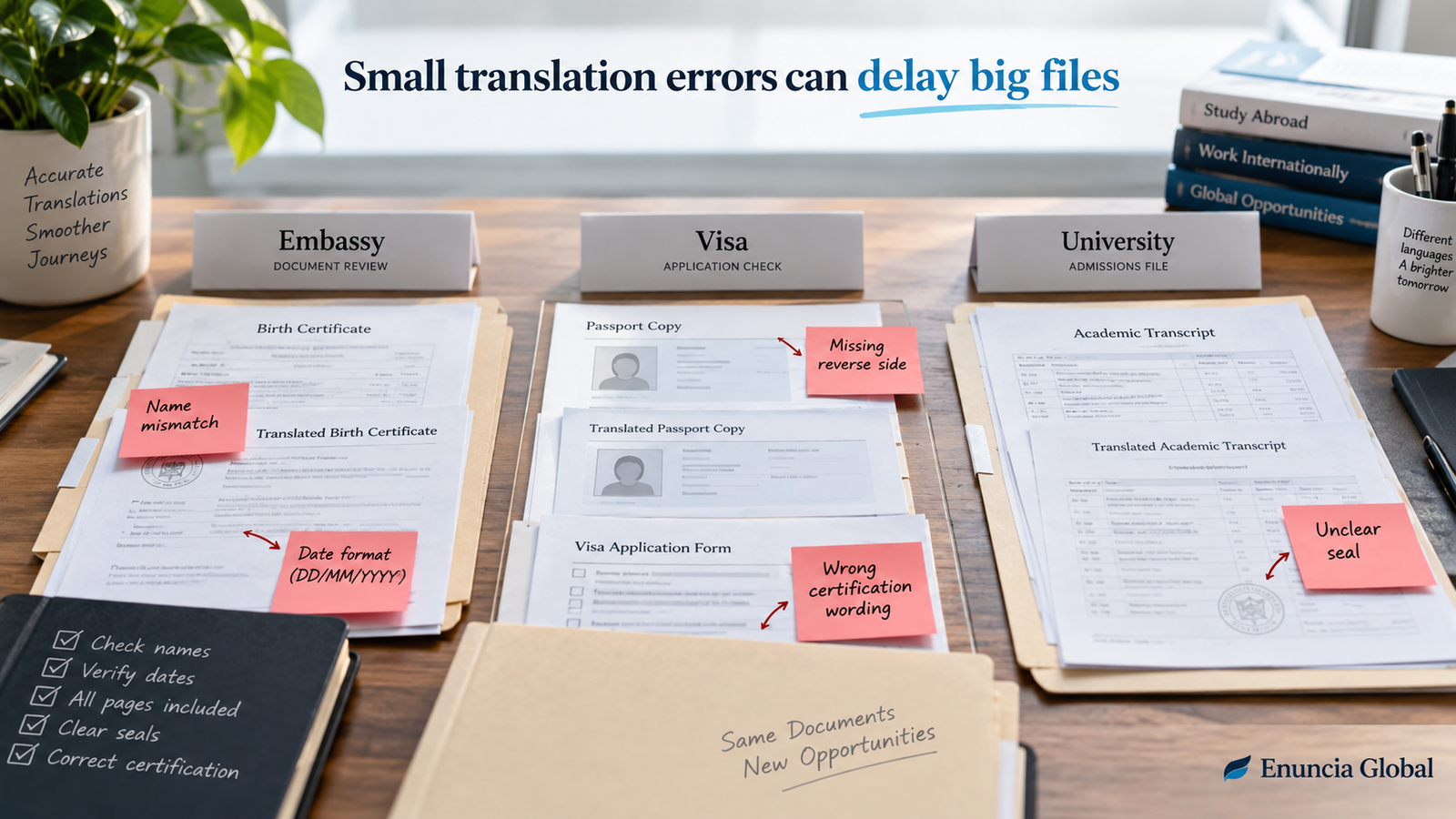
Most delayed document files do not fail because the whole translation is bad. They fail because one small detail breaks confidence: a name mismatch, missing reverse side, wrong date format, unclear seal, cropped registry number, unexplained abbreviation or certification wording that does not match the receiving authority.
Small errors that cause big delays
Embassy, visa and university files usually move through checklists. A translation that looks readable can still fail if it does not match the checklist. The most common problems are name mismatch, missing reverse side, date ambiguity, untranslated seal text, cropped registry details, unexplained handwritten notes and certification wording that the authority does not accept.
Name and spelling mismatch
Name consistency is one of the first checks. If a birth certificate uses one spelling, passport another and translation a third, the file may need clarification. The translator should use the source faithfully while checking accepted English spelling from passports, IDs, prior certificates and academic records.
Dates seals and reverse sides
| Error | Why it causes trouble | How to avoid it |
|---|---|---|
| Date format confusion | Day/month order may be read wrongly | Use clear English format and preserve source date |
| Missing reverse side | Endorsements or seals may be ignored | Scan both sides of every page |
| Unclear seal | Authority may not know what was certified | Translate readable seal text and flag unclear text |
| Cropped number | Registry or roll number may not match | Use full-page scans |
Certification wording problems
Some receiving authorities expect a translator declaration, some ask for notarization, some want apostille or attestation, and some accept a certified translation only from specified providers. Apostille or legalization does not automatically translate the document. Translation, certification and authentication should be planned as separate layers.
Embassy visa and university differences
Embassy files often focus on identity, relationship and document route. Visa files often focus on purpose, dates, financial or employment support. University files focus on institution names, grades, dates and document completeness. A single translation format may not serve all three without adjustment.
Pre-submission checklist
- Scan every page and reverse side.
- Share passport spelling and prior English records.
- Tell the translator the receiving authority and country.
- Check whether apostille, attestation, notarization or certification is required.
- Review names, dates, numbers, seals and attachments before submission.
Send the file before you submit it anywhere
Call +91-931-505-6112, WhatsApp +91-931-505-6112, email info@enuncia.global, or use Get Free Quote. Share the source document, destination country, receiving authority and deadline so Enuncia Global can quote the right translation, formatting and certification scope.
FAQs
Can a small spelling mismatch delay a file?
Yes. If the translated name does not match passport, certificate or prior record spellings, the receiving authority may ask for clarification.
Should reverse sides be translated?
If there is any stamp, seal, endorsement, instruction, QR code or note, include the reverse side in the review.
Can Enuncia check a file before submission?
Yes. Send the source, translation purpose, destination authority and deadline for a pre-submission translation review.
Requirements can change by receiving authority, country and document type. Treat this guide as preparation support and confirm final instructions with the authority receiving the file.