Japanese interpretation for NCR industrial growth
Japanese Interpreter Demand in Delhi NCR and the Japan Industrial Township
As Japan-linked industrial townships around Delhi NCR become more visible, companies are asking a practical question: who will make meetings, factory visits, technical training, HR onboarding, legal paperwork and vendor negotiations understandable in both Japanese and English or Hindi? Enuncia Global can supply that missing language bridge before communication delays become business delays.
 Enuncia Global
Why the Japanese city story is really a language-capacity story
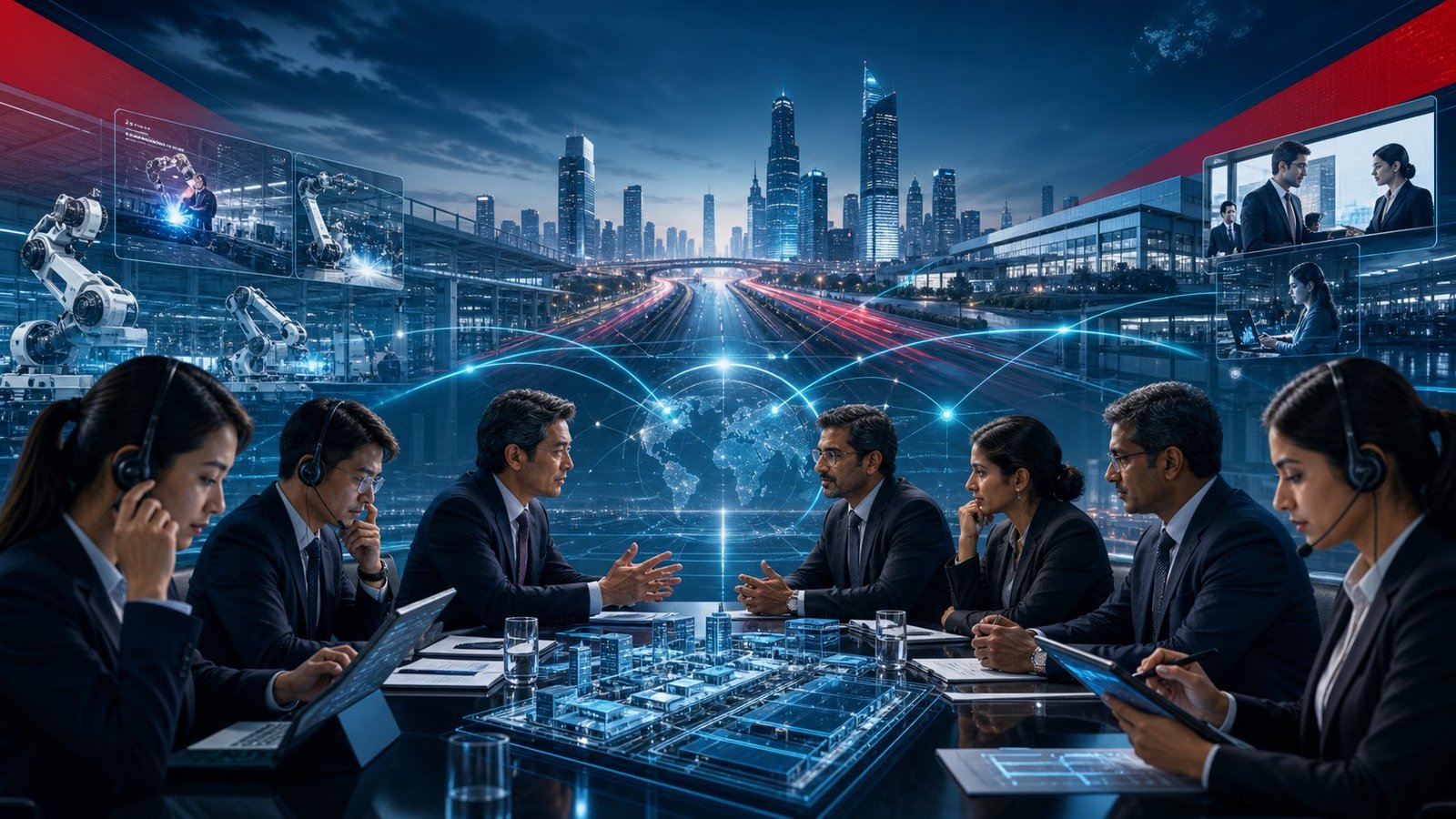
Many business buyers casually describe the new Japan-linked industrial ecosystem near Delhi NCR as a Japanese city. The more accurate working phrase is Japan Industrial Township growth, especially around MET City in Jhajjar and the wider NCR manufacturing corridor. The business effect is still very real. When Japanese companies, suppliers, engineers, quality teams, consultants, banks, government visitors and Indian partners meet more often, the need for Japanese interpreters rises quickly.
Interpretation is not a decorative service in this setting. It decides whether a production concern is understood, whether a safety instruction is followed, whether a technical drawing is explained correctly, whether a vendor commitment is recorded, and whether a senior visitor leaves the room confident. A bilingual greeting helps at reception; industrial collaboration needs trained language handling from the first agenda note to the last action item.
Where Japanese interpreters are needed in Delhi NCR
The surge is visible across plant visits, site inspections, buyer-supplier meetings, equipment installation, machine commissioning, audit walkthroughs, HR onboarding, expat support, customer demonstrations, boardroom discussions, banking meetings, real estate visits, land and compliance briefings, training sessions and trade delegations. A single day can shift from polite introductions to dense engineering vocabulary. The interpreter must move with the meeting, not merely translate isolated sentences.
Delhi NCR adds another layer. Meetings may start in Delhi, move to Gurugram, continue in Noida or Greater Noida, and end with a factory or township visit in Haryana. The language plan has to account for travel time, venue acoustics, microphone setup, security entry, document confidentiality, the difference between a formal boardroom and a noisy shop floor, and whether the Japanese visitor expects consecutive interpretation, whisper support, remote interpretation or bilingual written minutes.
How Enuncia Global helps companies meet the interpreter shortage
Enuncia Global can help companies move from last-minute searching to a managed Japanese language desk. For confirmed meetings, the team can review the industry, agenda, participant list, terminology, venue and language direction before assigning a suitable interpreter. For recurring work, the team can maintain glossaries, previous minutes, approved terms, product names, machine references, quality phrases and reporting templates so each visit does not start from zero.
The service is useful for Japanese to English interpretation, English to Japanese interpretation, Japanese to Hindi liaison support, bilingual meeting notes and Japanese document translation. It can also support interpreter backup, remote briefings, travel-ready coordination, NDA handling, post-meeting summaries and coordination with translation teams who prepare contracts, manuals, certificates, policy files or training decks around the same engagement.
For urgent NCR assignments, the first filter is availability, but the second filter is fit. A polite interpreter may still be the wrong choice for a robotics review, a medical-device plant, an automotive defect discussion or a legal negotiation. Enuncia Global can separate guest-handling, shop-floor, technical, commercial and authority-facing language needs before confirming the assignment.
Technical sectors where mistakes become expensive
Japanese interpreter demand in Delhi NCR is strongest where language errors create operational cost. Automotive components, electronics, precision manufacturing, robotics, medical devices, industrial automation, logistics, packaging, chemicals, renewable energy, factory construction and quality systems all use vocabulary that cannot be guessed from ordinary conversation. A term for tolerance, calibration, defect category, torque, trial batch, validation, warranty claim or production stoppage can change the decision in the room.
Enuncia Global treats these assignments as preparation-heavy work. The team asks for product notes, diagrams, old minutes, drawings, safety documents, presentations, manuals, training slides, inspection lists, purchase orders and the likely meeting flow. The interpreter is then briefed on tone, hierarchy, honorific expectations, business etiquette, sensitive points and whether the discussion is exploratory, commercial, technical, legal or corrective.
Beyond interpretation: the documents around Japanese growth
Every interpreter assignment usually carries a document trail. A Japanese company may need an English site note, a bilingual vendor email, an employment letter, a lease annexure, a board document, a bank file, a technical manual, an import paper, an ISO-related audit note, a training transcript, a subtitle file for safety videos, a visa-support letter, a medical record or a certified translation for authority use. When documents and spoken meetings are handled separately, small inconsistencies creep in.
A stronger route keeps the spoken and written parts connected. Enuncia Global can align meeting interpretation with Japanese translation, localization, transcription, subtitling and document formatting. Names, dates, seals, addresses, model numbers, product terms, company names and sign-off phrases can be checked across the file set. This gives Japanese visitors and Indian teams a cleaner record of what was said, what was agreed and what still needs review.
How to brief a Japanese interpreter for NCR work
A useful brief should mention the meeting date, city, venue, number of participants, language direction, subject, industry, expected duration, dress code, travel plan and whether the interpreter needs to sign an NDA. Share the agenda, product vocabulary, speaker names, company names, presentation deck and any sensitive topics. If the meeting includes a factory walkthrough, identify noise levels, safety gear, restricted zones, photography rules and whether the interpreter will move with one visitor or support a group.
For high-stakes meetings, Enuncia Global can help split the requirement into pre-meeting translation, onsite interpretation, post-meeting transcription and written summary. That structure gives Indian and Japanese teams a calmer way to work through complex questions. It also makes the interpreter more effective because the language support is planned around the business outcome, not treated as an afterthought.
Practical next step
Send the agenda, industry, venue and language direction. Enuncia Global can help structure interpreter support, document translation and follow-up records for Delhi NCR and nearby industrial visits.
FAQs
Short answers for buyers comparing language support from Delhi.
Can Enuncia Global arrange Japanese interpreters for factory visits?
Yes. Share the city, venue, industry, agenda, duration and language direction so the team can confirm the right onsite or remote interpreter route.
Can Japanese meeting notes and documents be translated too?
Yes. Enuncia Global can connect interpretation with Japanese document translation, meeting summaries, technical glossary handling, subtitles and transcription.
Plan Japanese interpretation before the meeting pressure starts
Send the agenda, industry, venue and language direction. Enuncia Global can help structure interpreter support, document translation and follow-up records for Delhi NCR and nearby industrial visits.