
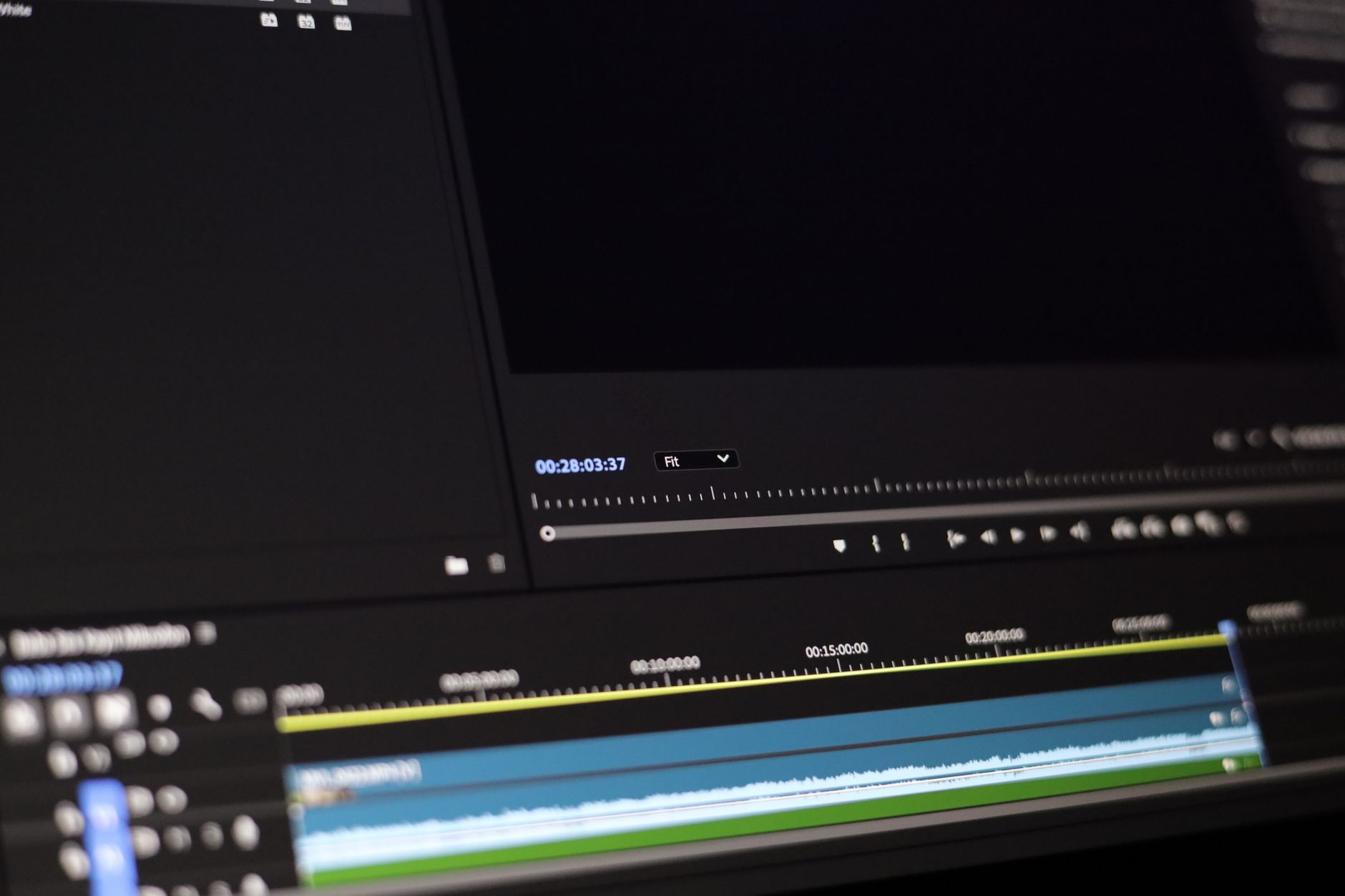
Subtitling and captioning are often discussed as if they are only text work. In real projects, they are viewing-experience work. A subtitle can be accurate and still fail if it stays too long, disappears too quickly, covers important screen detail or uses a sentence that nobody can read before the next shot.
For Enuncia Global, the practical question is simple: will a viewer understand the video comfortably while watching it at normal speed? That question changes how the file is translated, shortened, timed, reviewed and delivered.
Good subtitles respect speech, screen, speed and audience. Captions go further by also carrying sound cues, speaker clarity and accessibility signals where required.
Subtitles Are Not Long Translations Broken Into Lines
A written translation can use a complete sentence with careful explanation. A subtitle often cannot. The viewer is listening, watching movement, reading the line and processing context at the same time. Long phrasing creates fatigue, especially in training videos, interviews, reels, webinars, product explainers, legal recordings, education content and corporate communication.
This is why subtitling needs editorial judgment. The translator must protect meaning while shaping the line for reading speed. Names, numbers, warnings, dates, brand terms, instructions and technical phrases must remain accurate, but supporting words may need to be tightened.
What Captioning Adds
Captions may include more than dialogue. They can identify speakers, note meaningful sounds, mark music, show off-screen speech or clarify accessibility information. This matters for educational content, public videos, training material, social media clips, legal recordings, healthcare communication and videos meant for viewers who cannot rely on sound.
Captioning should be planned before delivery because the final format may change. A burned-in caption, SRT file, VTT file, editable subtitle sheet and platform-ready upload file are not the same deliverable.
Common Mistakes In Subtitle Projects
- using literal translation that is too long for the screen
- ignoring shot changes and visual timing
- placing text over faces, product labels or important on-screen graphics
- forgetting speaker labels in interviews or panel discussions
- mixing subtitle translation with transcript formatting
- delivering a file type the platform cannot accept
How Enuncia Global Reviews A Video Brief
The team checks the source language, target language, video duration, audio clarity, number of speakers, accent difficulty, platform, deadline and desired output. A documentary interview may need transcript plus translation. A social reel may need short, clean lines. A training video may need terminology consistency. A legal recording may need careful speaker labels and a more conservative transcript.
If the video already has a script, that script is checked against the actual audio before subtitle work begins. If there is no script, transcription comes first. Where translation is needed, the translated subtitle should be reviewed against timing and reading comfort, not only against the source words.
What To Send For A Faster Quote
- video file or accessible download link
- source and target language
- duration and deadline
- required format, such as SRT, VTT, burned-in captions or editable sheet
- speaker names, glossary terms, brand words and platform instructions if available
When Professional Subtitling Is Worth It
Professional review is useful when the video will be watched by clients, students, employees, patients, customers, public viewers, court users, event audiences or overseas teams. It is also important when the video includes technical terms, legal statements, medical information, multiple speakers, fast speech, background noise or a short social-media viewing window.
For businesses, subtitles can make a video easier to watch without sound. For education teams, captions improve clarity. For multilingual campaigns, subtitle quality affects whether the message feels reliable. For official or sensitive recordings, accurate timing and labels can prevent confusion.
Related Enuncia Services
Enuncia Global supports subtitling services, transcription services, voiceover and dubbing, localization and document translation for connected language workflows.
FAQs
Can Enuncia Global create subtitles from a video without a script?
Yes. The video can be transcribed first, then translated or timed as required.
What is the difference between subtitles and captions?
Subtitles usually carry speech in another language or readable text form. Captions may also include speaker labels and meaningful sound information.
Can subtitles be burned into the video?
Yes, if the project requires a video file with visible text. Separate SRT or VTT files can also be prepared where the platform supports them.
Need Subtitles Or Captions?
Share the video, language pair and required format with Enuncia Global. Use Get Free Quote, call +91-931-505-6112, or email info@enuncia.global.
Why Subtitle Translation Needs Viewer Testing
Subtitle translation has to balance meaning, timing and viewer comfort. A literal line may be accurate in a document but unreadable on screen if it crowds the frame or appears for too little time.
The review should include line length, reading speed, scene changes, names, speaker labels, sound cues and platform requirements. These checks are different from ordinary document proofreading.
Enuncia Global asks whether the client needs subtitles, SDH captions, closed captions, translated captions or a transcript so the workflow matches the final video use.
Where Thin Content Creates Rework
A stronger page should say what can go wrong before delivery. For Subtitling and Captioning Services in India: Why Readability Matters as Much as Translation, the problem is usually not only language accuracy. It is also the document route, source quality, receiver expectation, file format, timing and whether the customer has already received an instruction from an authority or reviewer.
The safest intake note records the exact source, final use and evidence available. In practice, that means checking translated subtitles, SDH captions, reading speed and then confirming scene changes, platform delivery before work starts.
Enuncia Global also separates official-use output from reader-facing output. A certified document, website page, transcript, caption file, business packet and legal attachment may use the same topic name but need different quality checks and delivery formats.
This additional section is intentionally practical. It gives customers a clearer preparation path and gives the page enough useful substance to stand on its own instead of depending on repeated service phrases.
Practical Items to Confirm
- translated subtitles should be checked before the final quote or delivery route is confirmed.
- SDH captions should be checked before the final quote or delivery route is confirmed.
- reading speed should be checked before the final quote or delivery route is confirmed.
- scene changes should be checked before the final quote or delivery route is confirmed.
- platform delivery should be checked before the final quote or delivery route is confirmed.
Customers can call Get Free Quote, email info@enuncia.global, or call +91-931-505-6112 with the file and final-use note.
Subtitling and Captioning Services in India: Why Readability Matters as Much as Translation Specific Notes
A readability review looks at words per second, character count, line breaks, scene changes, speaker turns and whether the viewer can read while still watching the action.
Translation choices also change with platform. A training video, film festival screener, YouTube short, corporate module and legal review clip may need different subtitle density and caption style.
The customer should share the video, transcript if available, target language, platform, whether SDH cues are needed and the required file type, such as SRT, VTT or burned-in subtitles.
A Small Readability Test Before Delivery
Before a subtitle file is delivered, Enuncia Global checks one short sample as a viewer would see it: line length, reading speed, shot change, speaker switch, on-screen text and whether a technical term needs to stay in English. This small pass often catches issues that a plain transcript cannot show.
For SDH captions, the check also looks at useful sound labels, music cues and speaker identification. Too many labels distract the viewer. Too few labels make the video harder to follow without audio.
Details to Confirm
- Send the final video cut whenever possible.
- Mention whether the output is SRT, VTT, burned-in subtitles or an editable review file.
- Share brand spellings, speaker names and terms that should not be translated.
Related Enuncia Global routes: Subtitling services, SDH captioning services, Time-coded caption files.
3 Responses